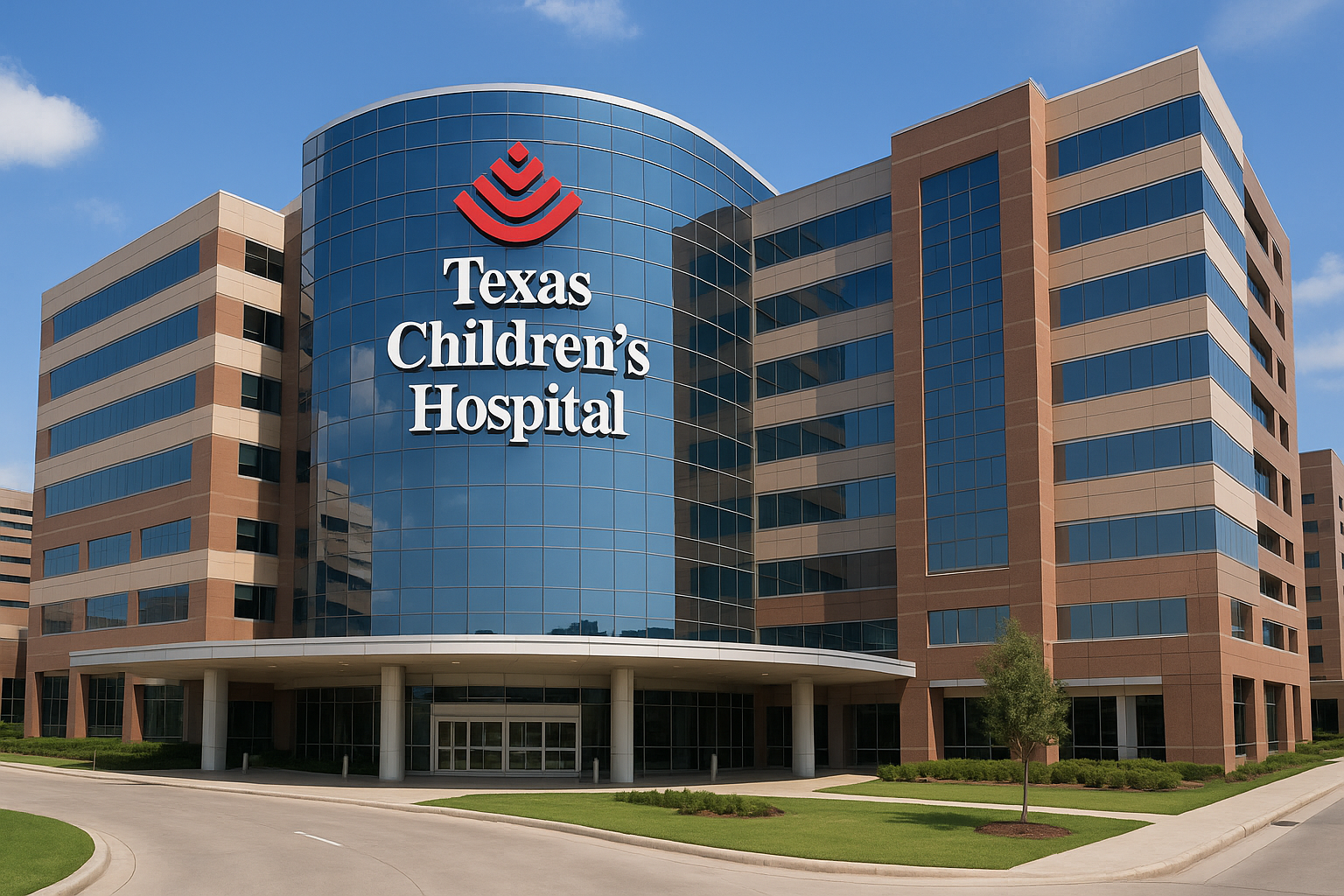
The little girl’s name was Betty Lou, and in 1954, she became the very first patient admitted to Texas Children’s Hospital. She was suffering from a congenital heart defect—the kind of condition that, just years earlier, would have been a death sentence. Her admission marked not just the opening of a new hospital, but the beginning of what would become the largest and most comprehensive children’s hospital in the United States.
Today, Texas Children’s Hospital spans multiple campuses, employs over 17,000 people, admits more than 35,000 children annually, and handles over 850,000 patient encounters each year. It’s consistently ranked as the nation’s top pediatric hospital, drawing families from all 50 states and more than 100 countries. Children arrive with rare cancers, complex heart defects, genetic disorders so unusual that only a handful of specialists worldwide can treat them, and injuries so severe that parents are told “take them to Houston” as their only hope.
But Texas Children’s didn’t start as a powerhouse. It started as an audacious idea: that children deserved their own hospital, designed specifically for their unique medical needs, staffed by doctors who specialized exclusively in pediatrics, and built around the understanding that healing a child requires treating not just their body but their spirit—and supporting the terrified parents trying to hold everything together.
This is the story of how a single building with 106 beds became a medical empire, and how Houston built the hospital for everything a child might need.
The Polio Catalyst
To understand why Texas Children’s Hospital came into existence, you have to understand the fear that gripped America in the early 1950s. Polio epidemics swept through communities every summer, striking seemingly at random, leaving children paralyzed or dead. Parents kept their kids home from swimming pools and movie theaters. Every fever, every complaint of muscle soreness, triggered panic.
Houston was hit particularly hard. In 1952, a severe polio outbreak overwhelmed the city’s hospitals. Children were crammed into adult wards, isolated from their terrified parents due to quarantine protocols, treated by doctors who specialized in adult medicine because pediatric specialists barely existed. The care was often excellent given the circumstances, but the circumstances were terrible.
Leopold Meyer saw this firsthand. A Houston philanthropist and cotton merchant, Meyer had long been interested in children’s welfare. The polio crisis convinced him that Houston needed a dedicated children’s hospital—a place designed from the ground up for pediatric care, with specialized equipment, trained pediatric nurses, and doctors who understood that children weren’t simply small adults but patients with unique physiological and psychological needs.
Meyer wasn’t alone in this vision. A group of Houston civic leaders and physicians, including Dr. Russell J. Blattner, who would become the hospital’s first physician-in-chief, began planning in earnest. They studied children’s hospitals in Boston, Philadelphia, and other cities. They raised funds from Houston’s business community and from families who had lost children to polio and other diseases. They secured land in the Texas Medical Center, the rapidly growing medical complex that was transforming Houston into a healthcare destination.
The timing was fortuitous. The Salk vaccine would be introduced in 1955, eventually conquering polio. But in 1954, as Texas Children’s Hospital opened its doors, polio still loomed large. The hospital’s iron lung units and rehabilitation facilities were ready for the young patients who needed them.
Betty Lou’s successful treatment signaled something important: specialized pediatric care worked. Children had different physiology, different medication dosages, different emotional needs. A hospital designed specifically for them could achieve better outcomes than general hospitals with a few pediatric beds tucked in a corner.
Building a Pediatric Culture
From the beginning, Texas Children’s understood that treating children required a different approach. The hospital’s designers created a building that felt less institutional and more welcoming. Patient rooms had windows at child height. Colors were bright and cheerful. There were playrooms and spaces for parents to stay with their children—revolutionary at a time when many hospitals strictly limited parental visits.
The nursing staff received specialized pediatric training. They learned how to talk to frightened children, how to explain procedures in age-appropriate language, how to spot signs of distress that children might not verbalize. They understood that a child’s recovery often hinged on feeling safe and comforted, not just on receiving the right medications.
Doctors at Texas Children’s chose to specialize exclusively in pediatrics at a time when this was still relatively unusual. They couldn’t maintain adult patient practices on the side. This total commitment to children’s medicine attracted physicians who were passionate about pediatric care and created an environment where pediatric expertise could deepen.
“The culture from day one was about seeing the child as a whole person,” recalls Dr. Margaret Williams, who joined Texas Children’s in 1962. “We weren’t just treating a disease—we were caring for a scared kid who didn’t understand why they hurt, and for parents who were terrified they might lose their child. That required a different mindset than adult medicine.”
This philosophy extended to how the hospital handled death—an inevitable reality in pediatric medicine. When children died, which happened more frequently in those early decades than today, the staff provided grieving services for families. Chaplains were available. Counseling was offered. The hospital recognized that losing a child was uniquely devastating and that families deserved support beyond the clinical.
The Heart of the Matter
If polio provided the catalyst for Texas Children’s founding, congenital heart disease became its signature achievement. The hospital opened just as pediatric cardiac surgery was emerging as a specialty, and it quickly established itself as a leader in the field.
Dr. Denton Cooley and Dr. Michael DeBakey, the legendary cardiac surgeons whose rivalry defined Houston’s cardiovascular surgery culture, both performed pioneering pediatric heart surgeries at Texas Children’s. Cooley, in particular, became known for his work on children’s hearts—operations so delicate and complex that only a handful of surgeons worldwide attempted them.
Children born with heart defects that once meant certain death within months or years began surviving—and thriving. Babies with holes in their hearts, malformed valves, or arteries connected incorrectly could be repaired. The surgeries were risky, the recovery difficult, but survival rates improved steadily as techniques evolved.
Texas Children’s developed a comprehensive cardiac program that included not just surgery but diagnostic cardiology, cardiac catheterization, and long-term follow-up care. Children would return for checkups years after surgery, and the staff took pride in watching patients grow up, graduate high school, have children of their own—lives that wouldn’t have been possible without those early interventions.
The cardiac program attracted families from across Texas, then across the nation, then internationally. Parents heard through medical networks or desperate internet searches that Houston had surgeons who could fix hearts that others deemed inoperable. They packed up their families and traveled—sometimes not even knowing if their child would be accepted as a patient, just hoping for a chance.
The Cancer Fight
In the 1970s and 1980s, Texas Children’s expanded aggressively into pediatric oncology, establishing one of the nation’s premier childhood cancer programs. Cancer in children is particularly cruel—diseases striking those who’ve barely begun life—but it’s also different from adult cancer in important ways. Children’s cancers are often more aggressive but also more responsive to treatment. The challenge is delivering therapies strong enough to kill cancer without destroying the child’s developing body.
Texas Children’s built a comprehensive oncology program that combined cutting-edge research with compassionate care. The hospital participated in national clinical trials testing new chemotherapy protocols, immunotherapies, and targeted treatments. When standard treatments failed, experimental protocols offered hope.
But the oncology program was never just about clinical excellence. The hospital recognized that a child with cancer is a child first—they still need to play, learn, socialize, and feel as normal as possible despite months of treatment. Child life specialists worked with patients to minimize trauma from procedures. Teachers helped children keep up with schoolwork during long hospitalizations. Therapy dogs visited cancer wards. Halloween costume parties and holiday celebrations continued even for the sickest children.
The oncology floors developed their own culture. Parents formed bonds in waiting rooms, supporting each other through the darkest moments. Survivors returned years later to visit the nurses who had cared for them. Memorial services honored children who didn’t survive, ensuring they were remembered not as case numbers but as individuals whose lives, however brief, mattered.
“You never get used to a child dying,” says Sandra Martinez, an oncology nurse with 30 years at Texas Children’s. “But you learn to channel your grief into caring for the next patient, and the next. You celebrate every remission, every discharge, every child who beats the odds. Those victories sustain you through the losses.”
Expansion and Specialization
Through the 1980s and 1990s, Texas Children’s grew explosively. The original building expanded. New towers were added. Specialized centers emerged for nephrology, neurology, gastroenterology, orthopedics, and virtually every pediatric subspecialty imaginable.
The hospital developed expertise in rare diseases—conditions so uncommon that most pediatricians might never encounter them. A child with a genetic disorder affecting only 200 people worldwide could find doctors at Texas Children’s who had treated multiple cases and published research on the condition. This concentration of rare disease expertise became self-reinforcing: as the hospital treated more unusual cases, it attracted more rare disease patients, which deepened its expertise further.
Fetal medicine emerged as a specialty, with Texas Children’s performing intricate surgeries on babies still in the womb—repairing spina bifida, removing tumors, treating twin-to-twin transfusion syndrome. These interventions could prevent disabilities or save lives before birth, though they carried significant risks. Parents faced agonizing decisions: undergo experimental surgery that might harm or help, or accept that their baby would be born with severe complications.
The neurology and neurosurgery programs tackled pediatric epilepsy, brain tumors, and traumatic brain injuries. The hospital installed advanced imaging equipment scaled for children’s smaller bodies. Surgeons performed hemispherectomies—removing half a child’s brain to stop catastrophic seizures—with outcomes that allowed children to eventually live relatively normal lives, demonstrating the remarkable plasticity of young brains.
Organ transplantation became another frontier. Texas Children’s performed kidney, liver, and heart transplants in children, dealing with unique challenges: smaller organs, developing immune systems, and the ethical complexities of transplanting organs into patients who would need immunosuppression for decades.
Each specialization required not just medical expertise but customized equipment. Standard medical devices didn’t work on premature babies or small children. Texas Children’s collaborated with medical device manufacturers to develop pediatric-specific equipment: smaller IV lines, appropriately sized instruments, imaging machines calibrated for children’s anatomy.
The Family-Centered Revolution
As Texas Children’s grew, it pioneered approaches to family-centered care that have since become standard in pediatric hospitals nationwide. The philosophy was simple but radical for its time: parents aren’t visitors to be tolerated—they’re essential members of the care team.
The hospital eliminated strict visiting hours, allowing parents to stay with their children around the clock. Patient rooms included sleeping accommodations for parents. Policies encouraged family presence during rounds and even during some procedures, recognizing that children often coped better with parents nearby.
The hospital developed extensive family support services. Social workers helped families navigate insurance, find lodging, and access financial assistance. The hospital partnered with Ronald McDonald House and other organizations to provide affordable housing for families traveling to Houston for treatment. Support groups connected families facing similar diagnoses.
“When your child is seriously ill, your whole life stops,” explains Patricia Chen, whose daughter underwent multiple surgeries for a congenital condition. “We lived in Houston for six months. Texas Children’s didn’t just treat Emma—they helped us survive as a family. They understood we were all patients in a way.”
The hospital also recognized that siblings suffered when a brother or sister was hospitalized. Programs included siblings in care planning when appropriate and provided activities and counseling to help them process their feelings of fear, jealousy, and guilt.
This holistic approach extended to acknowledging cultural and religious diversity. Chaplains from various faiths were available. Interpreters provided translation in dozens of languages. The hospital tried to accommodate religious practices and dietary restrictions. The goal was making every family feel respected and supported regardless of background.
The Research Engine
Texas Children’s understood early that being a top clinical institution required robust research. The hospital affiliated with Baylor College of Medicine, creating a powerful academic medical center where clinical care informed research and research findings quickly translated into better treatments.
The hospital invested heavily in research infrastructure—labs, equipment, and most importantly, talented investigators. Pediatric researchers studied everything from the genetics of rare diseases to better chemotherapy protocols to improved surgical techniques.
Some research focused on Houston-specific health challenges. The hospital’s researchers studied asthma in a city with significant air quality issues. They investigated the health impacts of Hurricane Harvey on children. They examined health disparities in Houston’s diverse, economically stratified population.
Clinical trials became a cornerstone of the research program. Texas Children’s participated in national and international trials testing new treatments, giving patients access to experimental therapies while advancing medical knowledge. For families whose children had exhausted standard treatments, clinical trials represented hope—even if the outcomes were uncertain.
The hospital also pioneered genomic medicine for children, sequencing patients’ genomes to identify disease-causing mutations. In some cases, genetic diagnoses led to targeted treatments. In others, they simply provided answers to families who had spent years seeking explanations for their child’s condition—closure that had its own value.
The Global Reach
By the 2000s, Texas Children’s reputation had become global. Families traveled from Mexico, Central and South America, the Middle East, Europe, and Asia seeking treatment. The hospital developed international patient services to help families navigate everything from visas to finding housing to coordinating care across borders.
Some international patients came because their home countries lacked pediatric subspecialists. Others came because Texas Children’s had treated similar cases successfully when other institutions had refused. Wealthy families paid out of pocket. Others fundraised in their communities or received support from charitable organizations.
The hospital also began extending its reach through telemedicine, allowing Houston-based specialists to consult on cases thousands of miles away. A pediatrician in rural Texas or a hospital in Latin America could connect a patient to Texas Children’s experts via video consultation, getting guidance without fthe family needing to travel.
Texas Children’s also established international partnerships, helping hospitals in other countries develop pediatric programs. Houston-trained physicians returned to their home countries to establish Texas Children’s-inspired pediatric centers. This global network spread pediatric care expertise while cementing Texas Children’s reputation as a leader in the field.
The Physical Expansion
The hospital’s growth required constant physical expansion. New towers rose every few years. By 2024, the main campus encompassed multiple interconnected buildings covering several city blocks. The hospital opened satellite campuses in Houston’s suburbs, bringing specialized pediatric care closer to families and reducing traffic to the main campus.
The newest facilities incorporate design innovations learned from decades of pediatric care. Patient rooms are larger with better natural light. Playrooms and healing gardens provide spaces for children to be children, not just patients. Art installations throughout the buildings aim to reduce anxiety and create a more welcoming environment.
Technology infrastructure received major investments. Advanced operating rooms equipped with robotic surgery systems and real-time imaging allow for less invasive procedures. The hospital built specialized units for different age groups—neonatal intensive care for premature babies, pediatric ICU for critically ill children, and adolescent units designed for teenagers who need something between pediatric and adult settings.
The hospital also built extensive simulation centers where staff practice complex procedures on mannequins before attempting them on patients. Surgical teams rehearse operations, emergency room staff drill on trauma scenarios, and nurses practice difficult conversations with actors playing distraught parents. This commitment to practice and preparation helps reduce medical errors and improves outcomes.
The Emotional Labor
Working at Texas Children’s requires enormous emotional resilience. Staff regularly witness children suffering from terrible diseases, watch families torn apart by medical crises, and sometimes lose patients despite their best efforts.
The hospital recognizes this emotional toll and provides extensive support services for staff. Counseling is available. Debriefing sessions follow particularly traumatic cases. The culture encourages staff to acknowledge their feelings rather than suppressing them in the name of professional detachment.
“You can’t do this work without it affecting you,” says Dr. Robert Kim, a pediatric surgeon. “I’ve operated on children who didn’t survive. I’ve had to tell parents their child is dying. That stays with you. But I’ve also seen children walk out of the hospital who came in near death. I’ve watched kids I treated grow up and bring their own children to see me. Those moments make the hard days bearable.”
Nurses, in particular, carry heavy emotional burdens. They spend the most time with patients, form close bonds with families, and often deliver the most intimate care. When a child they’ve cared for months dies, the grief is profound. Yet they return to work the next day to care for another critically ill child, somehow finding the strength to stay compassionate and professional.
The hospital also recognizes that even positive outcomes can be emotionally complex. A child survives cancer but faces years of late effects from treatment. A baby saved through heroic intervention has permanent disabilities. Staff must help families navigate these ambiguous successes—grateful their child is alive while grieving the life they expected to have.
The Economics of Pediatric Care
Running the nation’s largest pediatric hospital is extraordinarily expensive. Children require specialized equipment, longer hospital stays than adults, and highly trained staff. Many pediatric procedures are financially unprofitable—the costs exceed what insurance reimburses.
Texas Children’s operates as a nonprofit and relies on a combination of revenue sources. Insurance payments and patient fees cover some costs. Philanthropic donations—from Houston’s wealthy families, grateful former patients, and fundraising events—fill gaps. Research grants bring in additional funding. The hospital affiliated with Baylor College of Medicine provides academic credibility that helps attract donors and grants.
The hospital also provides significant charity care. Families unable to pay aren’t turned away. Children from impoverished backgrounds receive the same cutting-edge treatments as those from wealthy families. This commitment to universal access regardless of ability to pay is both a moral imperative and a financial burden.
Fundraising is constant and creative. The hospital hosts galas and golf tournaments. Former patients organize fundraisers. Corporations sponsor wings and research centers in exchange for naming rights. Small donations from grateful families accumulate alongside million-dollar gifts from philanthropists.
“We’re essentially subsidizing pediatric care with adult medicine profits and philanthropy,” explains a hospital administrator who requested anonymity. “The economics don’t work otherwise. Children need expensive specialized care but represent a small market. Adults need routine procedures that are profitable at scale. The medical center cross-subsidizes, and donors fill remaining gaps.”
The Pandemic Test
COVID-19 tested Texas Children’s in unprecedented ways. The hospital prepared for surges of critically ill children, though fortunately, severe pediatric COVID cases were less common than feared. Instead, the challenge became maintaining routine care while protecting immunocompromised patients from infection.
The hospital implemented strict visitor policies that separated parents from hospitalized children—a heartbreaking necessity. Children underwent procedures without parents holding their hands. Families video-called instead of visiting in person. Staff described it as torture—violating everything family-centered care stood for, but necessary to prevent viral spread.
The hospital also faced indirect pandemic impacts: children falling behind on vaccinations, delayed diagnoses of serious conditions because families avoided hospitals, mental health crises as children struggled with isolation and disrupted routines. Emergency rooms saw surges in suicide attempts and eating disorders among adolescents.
The pandemic accelerated telemedicine adoption. Families could consult specialists via video for many conditions, reducing travel burdens. But telemedicine couldn’t replace hands-on exams, and some families lacked internet access, creating new disparities.
Staff experienced unprecedented burnout. They worked exhausting hours under stressful conditions while worrying about infecting their own families. Some left healthcare entirely. The hospital struggled to maintain adequate staffing, competing for nurses with hospitals nationwide facing the same shortages.
Despite these challenges, Texas Children’s maintained its reputation for excellence. The hospital adapted, innovated, and continued delivering world-class pediatric care through the worst public health crisis in a century.
The Future Vision
Texas Children’s continues expanding and evolving. The hospital is investing heavily in precision medicine—using genetic information to customize treatments for individual patients. A child’s cancer might be sequenced to identify specific mutations, then treated with drugs targeting those exact genetic changes.
Artificial intelligence and machine learning are being integrated into diagnostic processes. Algorithms analyze medical images, flag potential issues, and suggest diagnoses. While doctors make final decisions, AI tools promise to reduce diagnostic errors and speed up care.
The hospital is also focusing on preventive care and addressing social determinants of health. They’re partnering with schools and community organizations to improve child health outcomes before kids need hospitalization. Programs address nutrition, obesity, asthma management, and mental health—recognizing that keeping children healthy is better than treating them after they’re sick.
Expansion continues geographically. New suburban campuses bring specialized care closer to families. International partnerships extend Texas Children’s expertise globally. The hospital aims to be not just a destination for the sickest children but a pediatric healthcare system serving diverse needs across geography and severity.
The Stories That Matter
Numbers tell part of Texas Children’s story—largest pediatric hospital, thousands of employees, hundreds of thousands of patient encounters. But the heart of the story lives in individual moments:
The premature baby who fit in her father’s hand, kept alive by machines and expertise, who walked into kindergarten five years later healthy and thriving.
The teenager with a rare genetic disorder who spent months searching for a diagnosis, finally finding doctors at Texas Children’s who recognized her condition and started treatment.
The child with a supposedly inoperable brain tumor whose surgical team spent eight hours delicately removing the mass, preserving function, giving him a future.
The parents who arrived certain they’d lose their child and left months later with a survivor, forever changed by the experience but grateful beyond words.
These stories multiply across decades—tens of thousands of children whose lives were saved, improved, or extended by the care they received. Many grew up to have careers, families, and experiences that wouldn’t have been possible without Texas Children’s intervention.
Former patients return as adults, sometimes bringing their own children as patients, sometimes as doctors and nurses joining the staff. The hospital has treated multiple generations of some families, creating continuity that spans decades.
The Larger Legacy
Texas Children’s Hospital represents something larger than just excellent medical care. It embodies a commitment to the idea that children deserve the best—that society should invest enormous resources in saving and improving young lives, even when outcomes are uncertain and costs are high.
This commitment isn’t universal. Many countries provide minimal pediatric specialty care. Some cultures accept child mortality that American medicine fights against. Even in the United States, not every family has access to Texas Children’s level of care—geography, insurance, and systemic inequities create barriers.
But the existence of Texas Children’s expands what’s possible. Treatments pioneered in Houston spread to other hospitals. Techniques developed there become standard care nationwide. Research findings improve outcomes everywhere. The hospital trains pediatric specialists who practice across the country and around the world.
The hospital also demonstrates what’s possible when medicine focuses on healing the whole child, not just treating disease. The family-centered approach, the attention to emotional wellbeing, the recognition that children need play and normalcy even during treatment—these insights have transformed pediatric care broadly.
Conclusion
From Betty Lou in 1954 to the thousands of children treated annually today, Texas Children’s Hospital has grown from an audacious idea into an indispensable institution. It’s the place desperate families go when they’ve exhausted other options, when their child has been diagnosed with something rare, when they need the absolute best doctor in Houston.
The hospital succeeded not through any single innovation but through sustained commitment to excellence, continuous expansion of capabilities, and an unwavering focus on improving children’s lives. It’s built on scientific rigor and technological advancement, but also on compassion, family support, and recognition that healing involves more than medicine.
Houston’s humid climate, diverse population, and position in the Texas Medical Center created ideal conditions for Texas Children’s growth. The city’s philanthropic culture funded expansions. The concentration of medical institutions enabled collaboration and competition that drove excellence. The international patient population pushed the hospital to handle increasingly complex cases.
But ultimately, Texas Children’s Hospital is about the children—the scared toddlers, the stoic teenagers, the fighting infants, and all the families who’ve walked through those doors praying for miracles. The hospital doesn’t promise miracles, can’t save every child, and sometimes delivers heartbreaking news.
But it promises to try—to bring every available tool, technique, and ounce of expertise to bear on helping children survive and thrive. For seventy years, Texas Children’s has kept that promise, evolving from a single building treating polio patients to a global pediatric healthcare powerhouse treating conditions that barely had names when Betty Lou became that first patient.
That’s the hospital for everything—everything a child might need, everything medicine can offer, everything families hope for when their child falls ill. It’s Houston’s gift to children everywhere, a testament to what becomes possible when medical excellence meets genuine compassion, and a reminder that sometimes the best measure of a society is how much it invests in saving its children.